Creating a lower cost, better built, faster delivered, sustainable building is achievable. Once we determine we want to create one - we will. Just ask Roger Bannister.
The most significant impact of Bannister's achievement is what happened immediately happened to the world of running. 37 runner broke the 4 minute barrier during the next year.
First the idea, then the model and then we work together to achieve it.
What is a retro-futurist? A steampunker, of course! Steampunk is a combination of old world craft with new world technology.
What lessons are there for mindshifting?
There is money to be made for those who can elegantly combine the two. However, that's not the lesson for today.
The Lesson: Adopting Virtual Design and Construction but following the old world phasing of schematics, design development, construction drawings etc. is a Steampunk approach to a project. It will soon become a curious novelty but misses the point and misses the target.
Steampunking can be a great exercise in creative thinking. This leads me to my favorite creative thinker, Michael Vance, former dean of Disney University. He describes innovation as a derivative of one of four approaches:
Invention/Invention
Invention/Di-vention
Invention/Extension
Functional Substitution
I enjoy Steampunk because it spurs a mindshift with a high cool factor thrown in. Take a look, below, at this Wall Street Journal Online video about Steampunking. What are some of your favorite Steampunk ideas?
Seadragon is a new Microsoft acquisition and part of their Photosynth labs. The application provides a unique interface for viewing photos. It allows full immersion into an image seamlessly viewing it in any scale (without loss of detail) or any angle. Seadragon also allows one to view any series of photos and rearrange their context and synthesize them into a composite image (don't ask me how and you have to see it to understand).
"Seadragon takes a large collection of photos of a place or an object, analyzes them for similarities, and displays them in a reconstructed three-dimensional space."
With Photosynth you can:
Walk or fly through a scene to see photos from any angle.
Seamlessly zoom in or out of a photo whether it's megapixels or gigapixels in size.
See where pictures were taken in relation to one another.
Find similar photos to the one you're currently viewing.
Send a collection - or a particular view of one - to a friend."
Take time to also view some of their videos. (you may need to download a plug-in to view these)
Seadragon is a major mindshift away from dealing with images as linear and sequential. It creates a seamless synthesis where each photo knows how it relates to the other photo. This kind of interface could become integral to understanding design, a building's interface with its environment and to re-purpose existing buildings.
Using off site manufacture can help the construction industry reduce waste according to a report published by WRAP (Waste & Resources Action Programme - Liz Goodwin, CEO).
WRAP commissioned AMA Research to undertake a scoping study into the uptake of off site manufacture and where the opportunities lie for growth. The research compared current off site manufacture waste levels with traditional methods.
Off site manufacture already offers the construction industry benefits in terms of time and cost predictability, health and safety and skills. However, this work shows that there is the potential to make a significant difference to the amount of waste the industry produces.
Some of the biggest waste streams in traditional construction are packaging (up to 5%), timber (up to 25%) and plasterboard (up to 36%). Up to a 90% reduction can be achieved by reducing wastes such as wood pallets, shrink wrap, cardboard, plasterboard, timber, concrete, bricks and cement by increasing the use of off site manufacture and modern methods of construction.
The great institutions of modernity are confronting the new realities of a digitalage.
Modern architecture and the idea of the master architect was born during the Renaissance. Construction is a combination of industrial era assembly and ancient craft practices. Technology has since introduced many significant innovations leading to greater efficiencies but has not changed the paradigm.
Please take a moment and listen to Erin McKean's presentation at the TED conference. You can find the video at the bottom of this blog. I found interesting and entertaining parallels to the disruptive changes in this arcane discipline and mindshift. Erin is the Chief Lexicographer and dictionary evangelist, for the Oxford English Dictionary. Her insights are wonderful (as well as few audacious words to add to your vocabulary). Listen and note her flatfooted critique of her own domain; the by-product of some excellent therapy or she is a Jim Collin'sLevel 5 leader.
These are a few highlights:
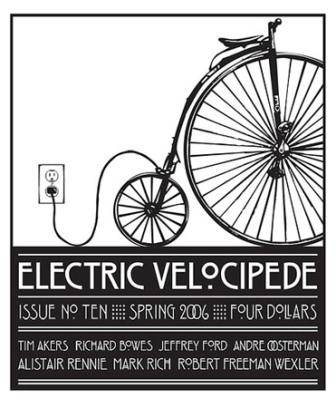
I love the Electric Velocipede analogy; "Victorian design with modern propulsion."
"Blaming the ham that's bigger than the pan."
"Could paper be the enemy of words?" Hmm - could paper be the enemy of design?
"Artificial constraints lead to arbitrary distinctions and a skewed worldview."
We're not alone. The OED is undergoing a mindshift. We're in noble company.
Web 1.0 focuses on delivering content. Web 2.0 focuses on participation, collaboration and user generated content (or value).
Using Web 2.0 requires a different mindset.
Think:
Amazon.com - customers say; "if you like XYZ, you'll like ABC."
Netflix - people who liked this movie also liked these movies.
Stumbleupon - people upload their videos on various sites; Youtube, Metacafe... and Stumbleupon collects the best for you to view.
"Is there a lesson, an opportunity?"
Craig Janssen, mindshift core member and principal for Acoustic and Strategic Dimension, raised the interesting question during our Houston gathering.
Craig shared that every company has tools that aid their clients in identifying needs or exploring solutions. What if companies automate some of their tools - providing clients with useful information, a valuable experience and in return gaining important information about needs and goals? Clients benefit, engage and end up coming back when they need help. Craig went on to share that making tools available that competitors don't have provides a clear advantage.
One example is Strategic Dimension's "Cost Escalation Calculator." Why is it valuable? Because SD found many client's did not make the connection that delayed decisions cost money. Even when they explained the consequences the idea remained abstract. Craig developed a simple tool and used it in presentations. When it was placed on their website clients would go back and play with the tool. The abstract idea of cost escalation suddenly becomes very tangible and creates better awareness and a sense of urgency for making timely decisions.
Consider:
What can make the client smarter?
What can make the intangible more tangible?
What would aid the decision process?
What provides an alternate perspective?
Is there a forum for feedback?
Is there a means for clients to tap into the wisdom of other clients?
Now go back again and explore Amazon.com, Netflix, Wikipedia and other popular Web 2.0 platforms.
The new technology of Web 2.0 creates new capabilities, a new platform for interaction with completely new value propositions. All of which - requires a new mindset when we think about aiding our client's and generating new value.
Members of mindshift see an opportunity to make a lasting, positive contribution to our world and our profession by creating a new integrated delivery model to design, build, and deliver non-residential real estate.


 Posts
Posts